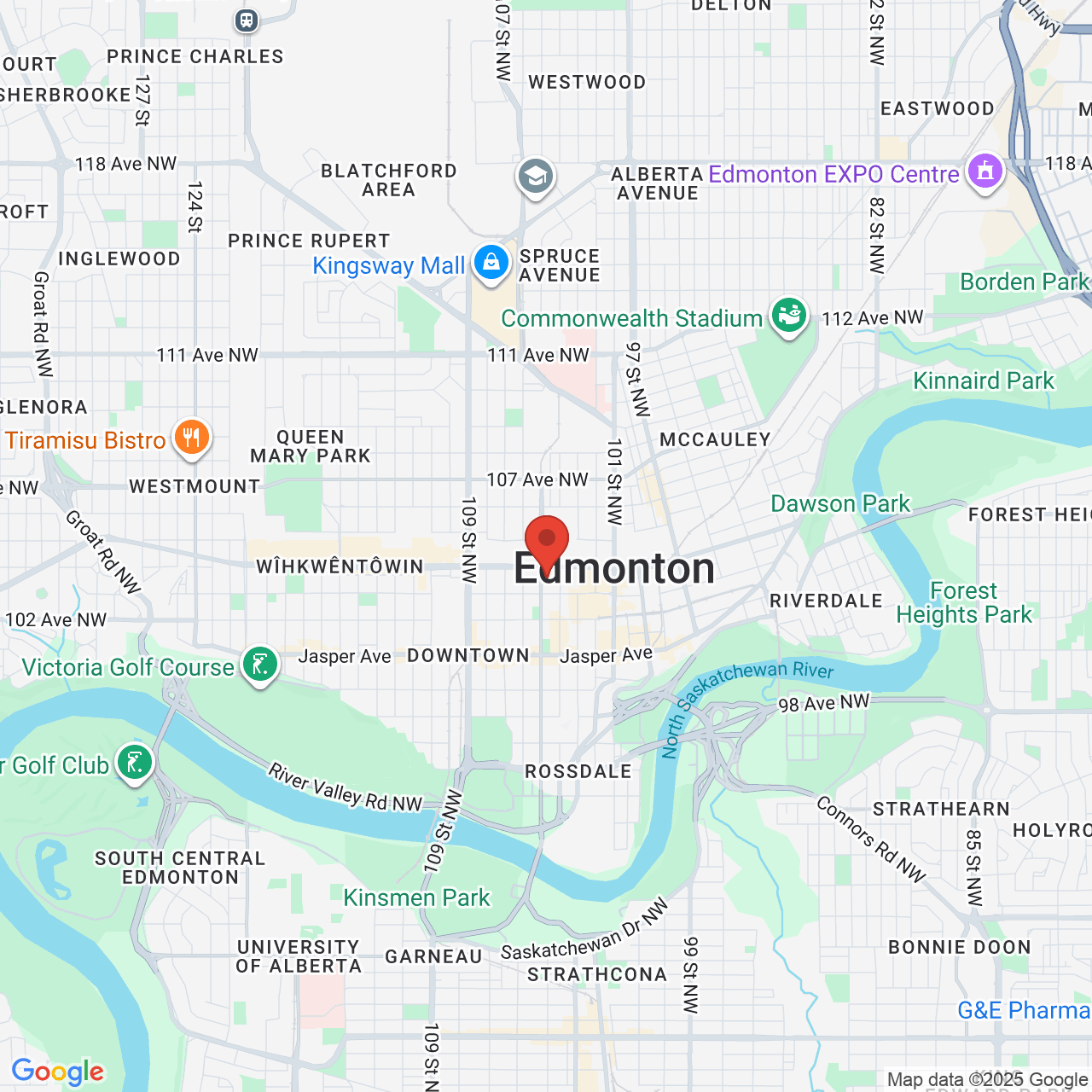
Edmonton City Center
866-421-4233


Experience Deep Relaxation During Treatment

IV Sedation Edmonton  

A drug, usually of the anti-anxiety variety, is administered into the blood system during dental treatment, this is referred to as Intravenous Conscious Sedation (aka "IV sedation"). Conscious sedation is sometimes (incorrectly) referred to as "twilight sleep" or "sleep dentistry". These terms are more descriptive of deep sedation. Deep sedation is not used in a dental office setting, and is more closely related to general anaesthesia (even though sedation occurs on a continuum). Unlike deep sedation or general anesthesia, patients breathe normally and without any need for a breathing tube down their throat. This page answers the most common questions regarding conscious IV sedation.

What does it feel like? Will I be asleep?

A lot of dental offices use terms such as "sleep dentistry" or "twilight sleep" when talking about IV sedation. This is confusing, because it suggests that IV sedation involves being put to sleep. In reality, you remain conscious during IV sedation. You will also be able to understand and respond to requests from your dentist.

However, you may not remember much about what went on because of two factors: firstly, in most people, IV sedation induces a state of deep relaxation and a feeling of not being bothered by what's going on. Secondly, the drugs used for IV sedation can produce either partial or full memory loss (amnesia) for the period of time when the drug first kicks in until it wears off. As a result, time will appear to pass very quickly and you will not recall much, or perhaps even nothing at all, of what happened. So it may, indeed, appear as if you were "asleep" during the procedure.

Is it still necessary to be numbed with local anaesthetic? Will my dentist numb my gums before or after I'm sedated?

The drugs which are usually used for IV sedation are not painkillers (although some pain-killing drugs are occasionally added, see below for a more detailed discussion), but anti-anxiety drugs. While they relax you and make you forget what happens, you will still need to be numbed.

If you have a fear of injections, you will not be numbed until the IV sedation has fully kicked in. If you have a phobia of needles, you will very probably be relaxed enough not to care by this stage. Your dentist will then wait until the local anaesthetic has taken effect (i. e. until you're numb) before starting on any procedure.


"But how does the dentist know whether I'm numb?"

"You check the LA [local anesthetic] has worked by asking the patient. Just coz they're sedated doesn't mean they can't answer you... in fact they better be able to answer or they ain't sedated, they're anaesthetised! If they're not numb enough they'll soon tell you. But they won't remember telling you of course [because of the amnesia effect]..." (answer courtesy of Gordon Laurie, BDS )


How is IV sedation administered?

"Intravenous" means that the drug is put into a vein. An extremely thin needle is put into a vein close to the surface of the skin in either the arm or the back of your hand. This needle is wrapped up with a soft plastic tube. The needle makes the entry into the vein, then is slid out leaving the soft plastic tube in place. The drugs are put in through that tube (which is correctly referred to as an "indwelling catheter", but more commonly known by the tradename of Venflon). The tube stays in place throughout the procedure.
 

Monitoring
 

Your safety is of utmost importance to us.Throughout the procedure, your pulse and oxygen levels are measured using a "pulse oximeter". This gadget clips onto a finger or an earlobe and measures pulse and oxygen saturation. It gives a useful early warning sign if you're getting dangerously low on oxygen. Also, someone ( a monitor) is always present to observe your breathing visually to prevent significant drop in your oxygen saturation. The warning signs are unresponsiveness and slow breathing. Other vital signs, such as blood pressure and heart rate are also monitored continuously. You might also feel a stethoscope head taped over your throat/chest area, this is connected to a bluetooth ear piece which helps us monitor your breathing continuously.


What drugs are used? Are there different types of IV sedation?

1) The most commonly used drugs for IV sedation are benzodiazepines, or "benzos" for short. These are anti-anxiety sedative drugs.Mostly the drug used for IV sedation is a short acting benzodiazepine, or "benzo" for short. IV administered benzos have 3 main effects: they reduce anxiety/relax you, they make you sleepy, and they produce partial or total amnesia (i. e. make you forget what happened during some or, less frequently, all of the procedure). Total amnesia is more common with midazolam compared to diazepam. Midazolam is the first choice because of its relatively short duration of action (meaning that it'll be out of your system faster).

2) The other drug used sometimes in conjunction with benzodiazepines are opiods. Along with the sedative quality these drugs offer some degree of pain relief as well. Commonly prescribed pain killers like codeine and oxycodone are some of the examples of opioids. Some people tend to be sensitive to opioids and may develop some nausea during or after the procedure. For this reason, it is important that you have nothing to eat or drink for about 8 hrs. If you ever had an adverse reaction to these drugs, please let us know ahead of time so that your sedation can be planned without the use of opioids.

3) A corticosteroid, such as dexamethasone is typically injected through the IV. This helps in reducing the inflammation from the surgery and tends to keep the swelling down on the day of the procedure.

4) For some lengthy and complicated procedures, an IV pain killer such as Toradol might be given intavenous at the end of the procedure. This helps minimize the discomfort after the procedure, until patient can go home, eat, and is able to take the oral pain medications.

Is it safe? Are there any contraindications?

IV sedation is extremely SAFE when carried out under the supervision of a specially-trained dentist. Purely statistically speaking, it's even safer than local anaesthetic on its own!

However, contraindications include pregnancy, known allergy to benzos, alcohol intoxication, CNS depression, and some instances of glaucoma. Cautions include psychosis, impaired lung or kidney or liver function, and advanced age. Heart disease is generally not a contraindication.


What are the main advantages of IV sedation?

* IV sedation tends to be the method of choice if you don't want to be aware of the procedure - you "don't want to know". The alternative in the US is oral sedation using Halcion, but oral sedation is not as reliably effective as IV sedation.

* The onset of action is very rapid, and drug dosage and level of sedation can be tailored to meet the individual's needs. This is a huge advantage compared to oral sedation, where the effects can be very unreliable. IV sedation, on the other hand, is both highly effective and higly reliable.

* The maximum level of sedation which can be reached with IV is deeper than with oral or inhalation sedation.

* Benzos produce amnesia for the procedure.

* The gag reflex is hugely diminished - people receiving IV sedation rarely experience difficulty with gagging. However, if minimizing a severe gag reflex is the main objective, inhalation sedation is usually tried first. Only if that fails to diminish the gag reflex should IV sedation be used for this purpose.

* Can be ideal for those with a phobia of dental injections.

* Unlike General Anaesthesia or Deep Sedation, conscious IV sedation doesn't really introduce any compromises per se in terms of carrying out the actual procedures, because people are conscious and they can cooperate with instructions, and there is no airway tube involved.


Are there any disadvantages?

* A needle has to be put in the arm or hand ("venipuncture"). If you have a general phobia of needles, this isn't much fun. In most cases, this is over quickly. We encourage you to bring a method of distraction that works for you ( such as an i-pod or a game ).

* It is possible to experience complications at the site where the needle entered, for example hematoma (a localized swelling filled with blood).

* While IV sedation is desired precisely because of the amnesia effect (i. e. forgetting what happened while under the influence of the drug/s), there can be a downside to this: if you can't remember that the procedure wasn't uncomfortable or threatening, you can't unlearn your fears. However, it depends on the precise nature of your phobia and the underlying causes to which extent this may be a problem. Some people would voice a concern that some patients can't be "weaned off" IV sedation, as dental anxiety tends to returns to baseline levels. As a result, people who rely on IV sedation may be less likely to seek regular dental care. Other people would argue that this is not a concern if IV sedation is readily available to people.

* Recovery from IV administered drugs is not complete at the end of dental treatment. You need to be escorted by a responsible adult.

* You should WANT to be sedated. If, for any reason, you're unwilling to "let go", for example because you don't like not being in control, it will be more difficult to be successfully sedated.


After IV Sedation:

(1) Have your escort take you home and rest for the remainder of the day.

(2) Have an adult stay with you until you're fully alert.

(3) Don't perform any strenuous or hazardous activities and don't drive a motor vehicle for the rest of the day.

(4) Don't eat a heavy meal immediately. If you're hungry, eat something light, e. g. liquids and toast.

(5) If you experience nausea, lie down for a while or drink some 7-up or Sprite. If nausea persists, you can take over-the-counter medicine like Gravol but please try to contact our office first.

(6) Don't drink alcohol or take medications for the rest of the day unless you've contacted your dentist first.

(7) Take medications as directed by your dentist.

(8) If you have any unusual problems, call your dentist.


Links:

1) American Dental Society of Anesthesiology

http://www.adsahome.org/

2) American Society of Anesthesiologists

http://www.asahq.org/